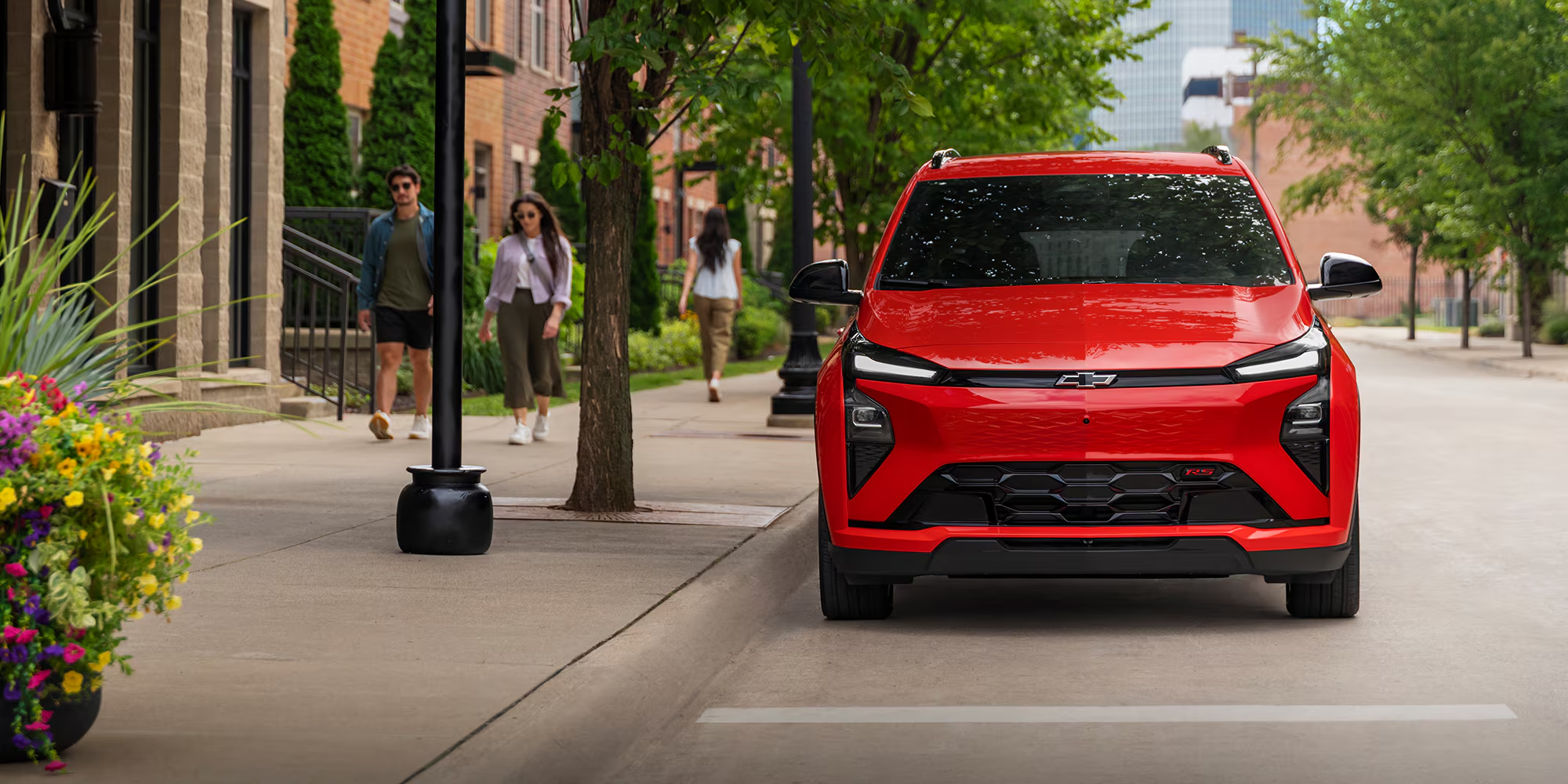
The 2027 Chevrolet Bolt returns with a familiar focus on practical electric driving, but nearly every important specification has moved forward. It offers up to 422 km of estimated range, dramatically faster DC charging, a standard NACS charge port, a redesigned digital interior and available technologies such as Super Cruise.
For shoppers researching an electric vehicle, the most useful questions are often very specific: how quickly can it charge, how much cargo does it hold, can it be charged at home, and what changes compared with the previous Bolt?
Here are detailed answers to the questions worth asking about the 2027 Chevrolet Bolt.
1. How much electric range does the 2027 Chevrolet Bolt provide?
The 2027 Chevrolet Bolt offers up to 422 km of estimated range on a full charge under optimal driving conditions.
That gives the Bolt enough range to handle considerably more than a typical daily commute and makes longer-distance driving realistic when charging stops are incorporated into the trip. Actual range varies with outside temperature, terrain, vehicle loading, speed, battery condition and use of climate controls.
2. What powers the new Chevrolet Bolt?
The Bolt uses a single electric motor driving the front wheels.
Output is 210 hp, providing the immediate accelerator response associated with electric propulsion. Because there is no conventional multi-speed transmission, power delivery is smooth and direct from low speeds through highway driving.
3. Is the 2027 Bolt available with all-wheel drive?
No. The 2027 Chevrolet Bolt is offered with front-wheel drive.
Drivers who want a Chevrolet EV with available all-wheel drive can look to models such as the Equinox EV. For winter driving, appropriate winter tires remain one of the most important factors in traction regardless of drivetrain configuration.
4. How quickly can the new Bolt charge at a DC fast charger?
The 2027 Bolt supports DC fast charging at 150 kW or more with compatible charging equipment.
Under appropriate conditions, Chevrolet estimates a 10% to 80% charge can take as little as 25 minutes. That is a major improvement over the previous generation and makes the new Bolt much better suited to longer trips requiring public fast-charging stops.
5. What is different about the Bolt’s NACS charge port?
The 2027 Bolt is the first Chevrolet equipped with a native NACS charge port.
Rather than requiring an adapter to connect to compatible NACS equipment, the connector is incorporated directly into the vehicle. This gives Bolt owners access to a growing network of compatible public charging stations, including compatible Tesla Superchargers.
6. What charging options are available at home?
The Bolt supports both Level 1 and Level 2 AC charging.
Its available Dual Level Charge Cord can be connected to:
- Level 1: A conventional 120-volt outlet for basic charging;
- Level 2: An appropriate 240-volt outlet for faster home charging.
The onboard charging system can support Level 2 AC charging at up to 11.5 kW with appropriate equipment. For many owners, overnight home charging will cover the majority of their regular charging needs.
7. Does Chevrolet recommend charging the Bolt to 100%?
Yes. With the new battery technology, Chevrolet recommends regularly charging the Bolt to 100% to achieve its intended overall charging performance and provide maximum daily range.
8. How much cargo space is available?
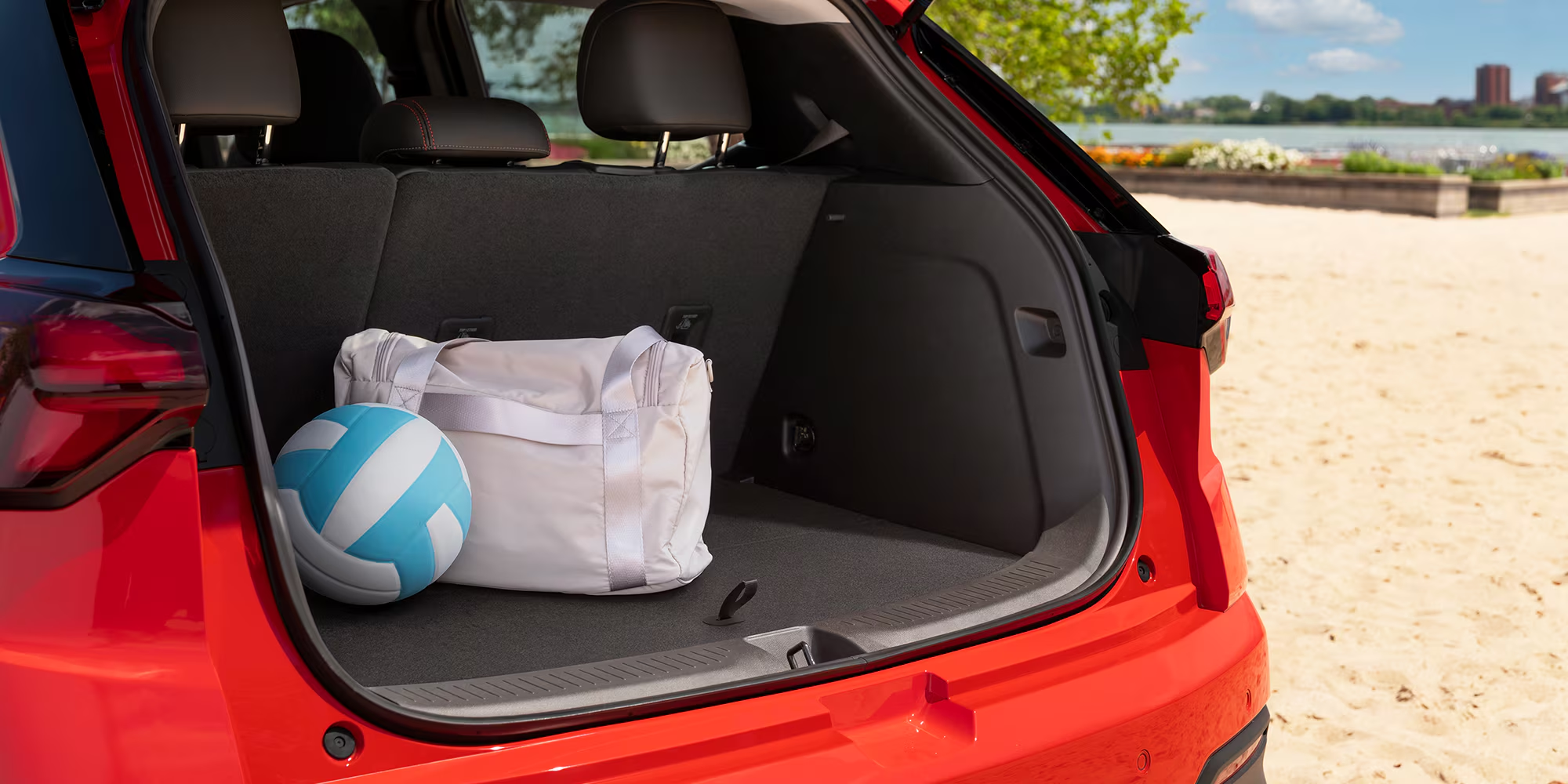
The Bolt provides up to 1,594 L of maximum cargo volume when the rear seats are folded flat.
It also includes approximately 113 L of storage beneath the rear cargo floor, giving owners another space for smaller items, charging accessories or belongings they would prefer to keep separated from the main cargo area.
9. How many passengers does the Chevrolet Bolt seat?
The Bolt accommodates up to five passengers.
Its tall hatchback-style body helps provide useful passenger room while maintaining the compact exterior footprint that makes it easy to manoeuvre and park. The folding rear seat also allows passenger capacity and cargo room to be adjusted as needed.
10. How large are the screens in the 2027 Bolt?
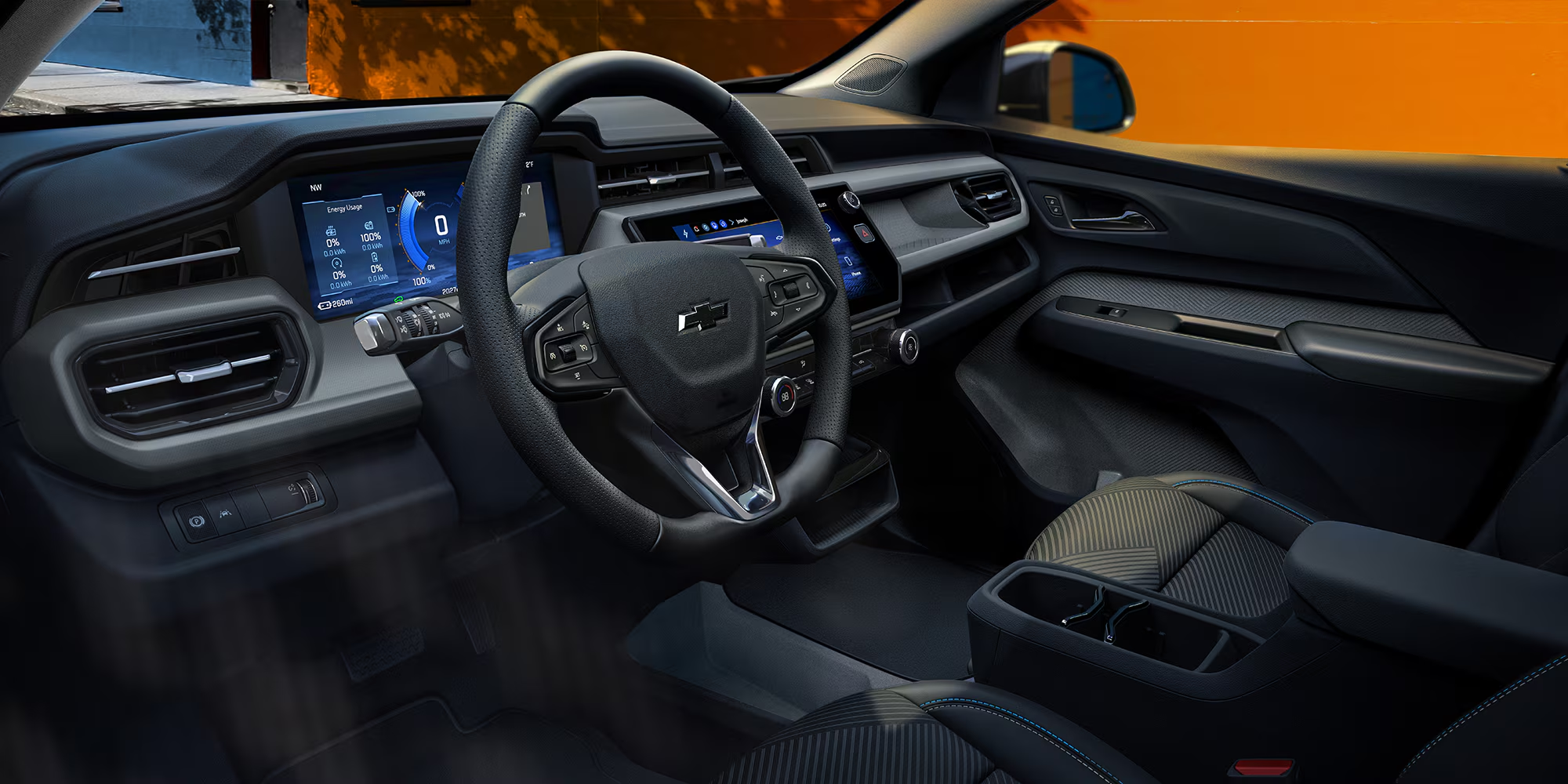
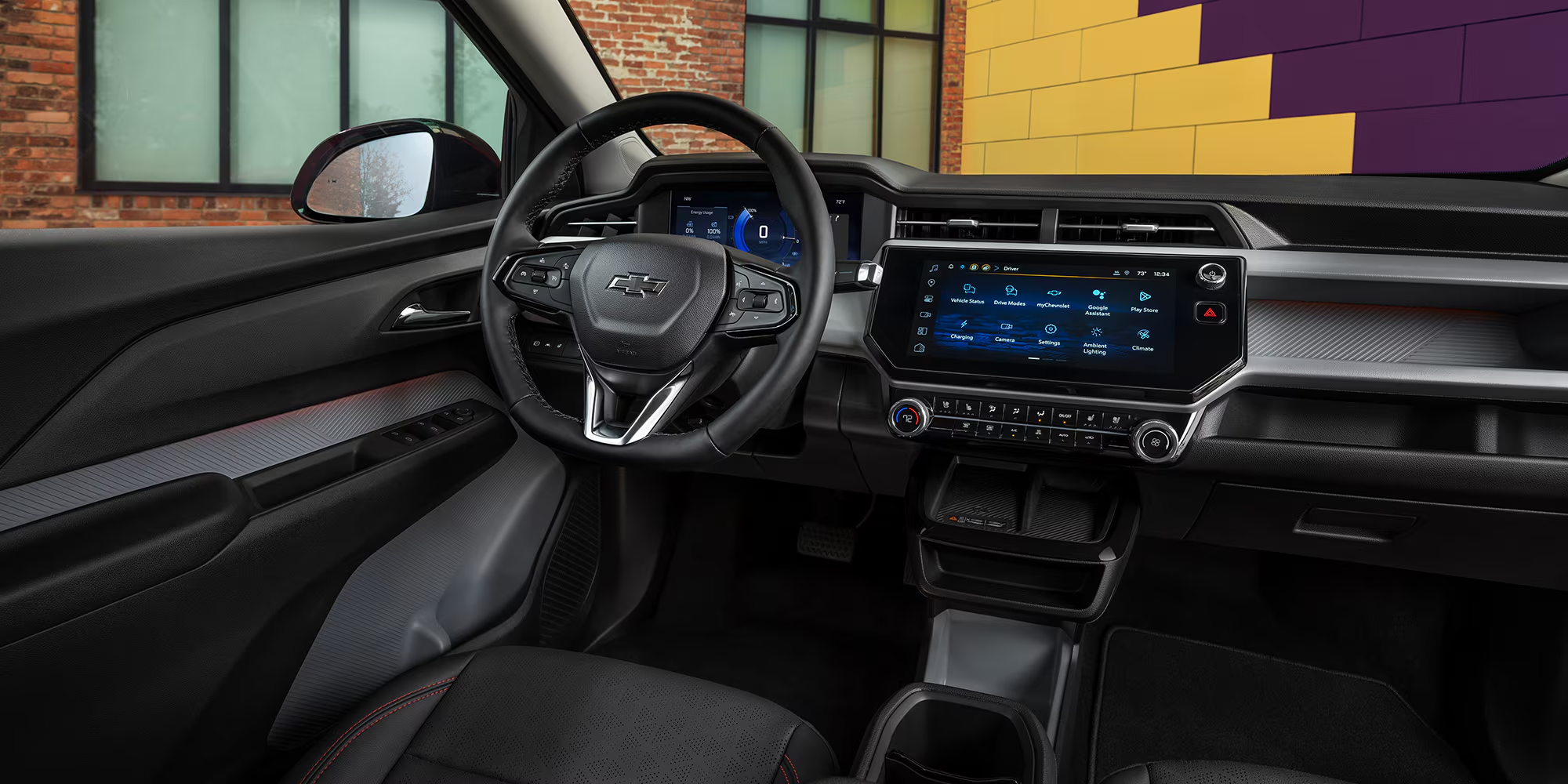
The redesigned interior includes two prominent digital displays:
- 11.3-inch diagonal infotainment touchscreen;
- 11-inch driver information display.
The infotainment system includes Google built-in compatibility and can provide access to navigation, connected applications and vehicle information.
11. How does Google built-in help an EV driver?
Google Maps can provide navigation directly through the vehicle rather than relying entirely on a connected smartphone.
For electric driving, integrated navigation can also help with charging-related trip planning. When the navigation system directs the Bolt toward a compatible DC fast charger, the vehicle can prepare the battery for charging when conditions allow, helping support efficient fast charging upon arrival.
12. What are the LT and RS versions of the Bolt?
The Canadian lineup includes LT and RS models:
- LT: Provides the core Bolt combination of range, charging capability and technology;
- RS: Adds a more distinctive appearance with a unique front grille, RS badging, Gloss Black roof rails, 17-inch Black wheels, Evotex seating with Red stitching and multicolour ambient lighting.
13. Is Super Cruise available in the Chevrolet Bolt?
Yes. Super Cruise hands-free driver assistance capability is available on appropriately equipped 2027 Bolt models.
On compatible roads and when operating conditions are satisfied, the technology can provide hands-free driver assistance while using a driver-attention system. It does not make the Bolt an autonomous vehicle, and the driver remains responsible for vehicle operation.
14. What safety and driver-assistance technology does the Bolt offer?
The 2027 Bolt offers 20 standard and available safety and driver-assistance features. Depending on configuration, available technologies can include HD Surround Vision, Rear Automatic Braking, Rear Cross Traffic Alert with Braking, Rear Pedestrian Alert and Intersection Collision Mitigation.
15. What is One-Pedal Driving?
One-Pedal Driving allows the driver to manage much of the Bolt’s acceleration and deceleration using the accelerator pedal. Lifting off the accelerator increases regenerative braking, slowing the vehicle while recovering energy that can be returned to the battery. The conventional brake pedal remains available whenever stronger braking is required.
16. What warranty covers the Bolt’s propulsion battery?
The high-voltage propulsion battery is covered by an 8-year/160,000-km limited warranty, whichever comes first. This warranty applies specifically to the propulsion battery and is separate from the vehicle’s general warranty coverage.
17. What are the biggest improvements over the previous Chevrolet Bolt?
The changes focus on key areas:
- Up to 422 km of estimated range;
- DC fast charging at 150 kW or more (10% to 80% charging in as little as 25 minutes);
- Native NACS charge port;
- Larger digital displays and Google built-in compatibility;
- Available Super Cruise and new RS model.